
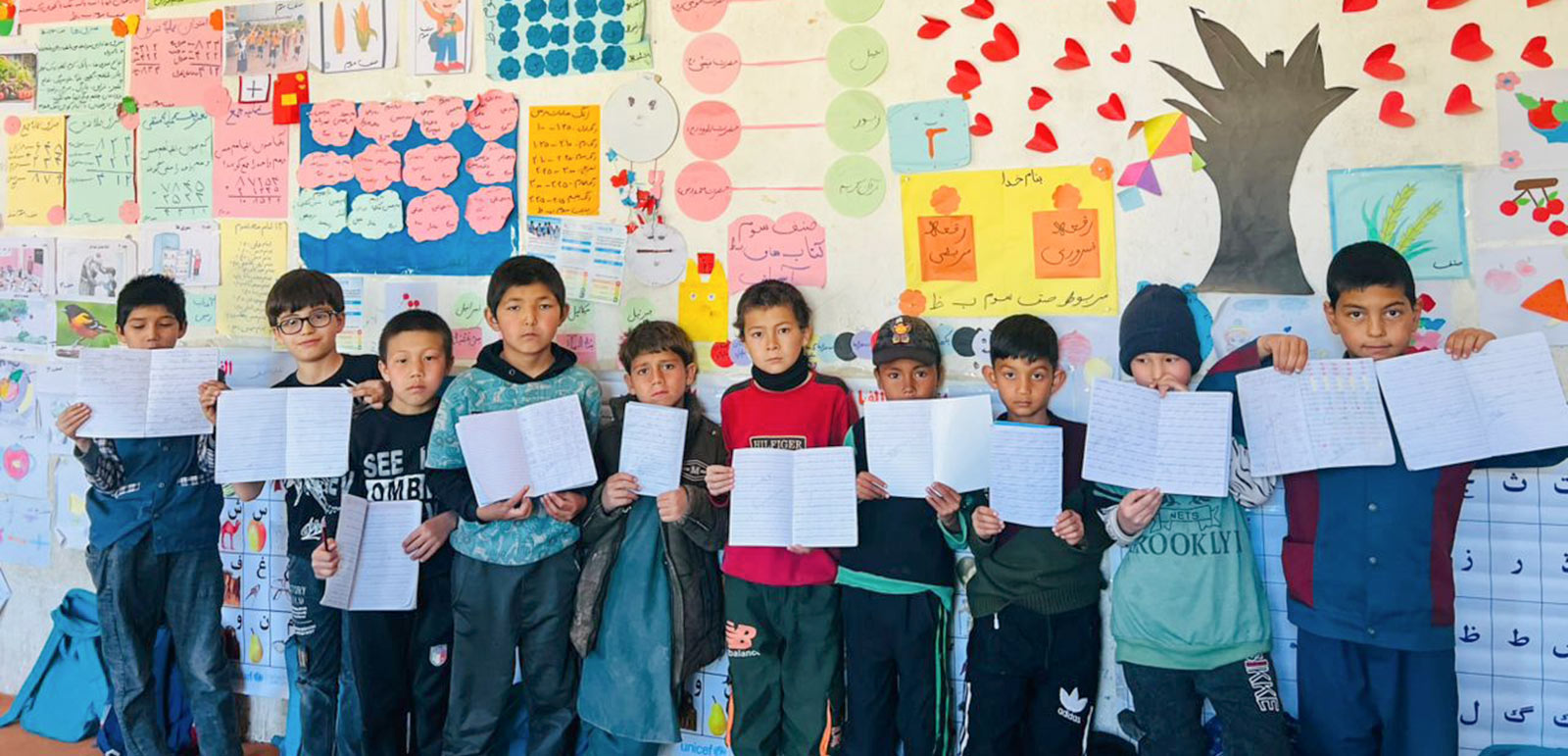
Community-Based Education – CBE Programming

Expanding equitable, safe, and quality education for out-of-school children in underserved areas through community-based, flexible, and culturally accepted learning models. ACDO's CBE programming targets children who cannot attend formal schools due to distance, insecurity, cultural restrictions, financial hardship, or lack of functional schools. CBE provides a practical, protective, and accessible alternative that supports enrolment, learning continuity, and eventual transition to formal schools once conditions permit.

The Concept behind Community-Based Education

CBE brings structured learning directly into the communities where children live, ensuring proximity, safety, and community involvement. CBE is a recognized national model endorsed by the MoE and the Education Cluster as the most effective approach for reaching out-of-school children, especially girls, in remote or fragile areas.

ACDO's CBE Model Principles

Access and proximity by ensuring that classes are established within walking distance, eliminating the primary barrier for many girls and young children.
Safety and protection through CBE learning spaces provide a protective environment with safeguarding measures, child protection referrals, and psychosocial support.
Community-owned programming that Community leaders, Shuras, parents, and caregivers are engaged in class establishment, teacher selection, and attendance monitoring.
Gender responsiveness approach where female teachers are prioritized, culturally appropriate learning times are arranged, and safe, gender-sensitive learning spaces are ensured.
Quality and consistency where teaching follows the MoE curriculum, supported by structured lesson plans, teacher coaching, assessments, and learning outcome tracking.
Pathways to formal education that CBE acts as a bridge, enabling learners to transition smoothly into formal schools with grade equivalency assessments.

How These Assistances Are Delivered

ACDO delivers CBE programming through a comprehensive package aligned with MoE and Education Cluster standards:

Service Delivery Components

  • Establishing CBE classes by Identification of safe and accessible community spaces (homes, mosques, hujras, or temporary structures)
  • Teacher's recruitment and training through selection of community teachers with MoE involvement, followed by in-service training in pedagogy, child protection, inclusive education, classroom management, and PSS
  • Provision of teaching and learning materials through distribution of textbooks, student kits, teacher kits, supplementary teaching aids, and classroom supplies
  • Community mobilization and SMS formation by establishment or strengthening of School Management Shuras (SMS) to support attendance, discipline, safeguarding, and overall class governance
  • Continuous monitoring and coaching through regular visits by education officers, monitoring teams, and pedagogical coaches to ensure quality teaching and learner progress
  • Assessments and certification by baseline, midline, and endline assessments to measure reading, writing, numeracy, and comprehension skills
  • Protection and inclusion through safeguarding, psychosocial support, disability inclusion practices, and referrals
  • Transition facilitation by coordination with DoE and nearby formal schools to transition learners through placement tests or grade equivalency recognition

Core Beneficiaries

  • Out-of-school children aged 6 – 14, including boys and girls in CBEs
  • Out-of-school youth aged 14 – 35, including male and female in ALPs
  • Girls in rural, conservative, and restrictive environments who face cultural or distance-related barriers
  • Children in conflict-affected, hard-to-reach, newly accessible, or shock-prone areas
  • Children affected by displacement, returnees, and vulnerable host community households
  • Children with disabilities who can participate with reasonable accommodations
  • Marginalized ethnic groups and poor households with limited access to education services

Field Implementation (Full Program Cycle)

ACDO implements CBE programming through a structured, multi-step process that ensures community ownership, quality delivery, accountability, and sustainability.

A. Coordination

  • Coordination with MoE and District Education Departments for class establishment approval
  • Engagement with the Education Cluster, ECW partners, and NGOs to avoid duplication
  • Alignment with national CBE policy, reporting requirements, and quality benchmarks

B. Community Mobilization

  • Socialization meetings with elders, community leaders, women's groups, and Shuras
  • Formation or revitalization of School Management Shuras (SMS)
  • Community mapping and identification of out-of-school children (OOSC)
  • Identification of secure, accessible classroom spaces

C. Program Setup

  • Recruitment of community teachers with MoE involvement
  • Training teachers in curriculum delivery, pedagogy, PSS, safeguarding, and assessments
  • Distribution of teaching and learning materials

D. Implementation

  • Daily teaching following the MoE curriculum
  • Regular teacher coaching and supportive supervision
  • Continuous learner attendance tracking and classroom management
  • Protection and safeguarding activities integrated into classroom routines

E. Monitoring, Evaluation & Learning

  • Monthly monitoring and quality assurance by field teams
  • Classroom observations using standard tools
  • Baseline, midline, and endline learner assessments
  • Feedback mechanisms and community consultations
  • Learning outcome analysis and reporting

F. Impact Assessments

  • Evaluation of improvements in literacy, numeracy, and school readiness
  • Household satisfaction surveys and SMS performance evaluations
  • Tracking reduction in OOSC numbers and gender parity improvements
  • Assessing protection outcomes and barriers reduced

G. Transition & Close-Out Strategy

  • Coordination with formal schools for placement tests and admissions
  • Handover of class data and student records to DoE
  • Community discussions on sustaining education access post-project
  • Documentation of lessons learned and best practices
  • Gradual withdrawal with SMS and DoE taking over community-based mechanisms

Outcomes & Impacts

Key Outcomes

Increased enrolment of out-of-school children, especially girls and children in remote areas. Improved foundational skills in literacy, numeracy, comprehension, and social development. Strengthened teacher capacity through ongoing training and classroom coaching. Enhanced community ownership and active involvement of SMS and parents. Safe, inclusive, and protective learning environments established within communities. Improved gender equity in learning through female teachers and localized classes.

Long-Term Impacts

Successful transition of CBE learners into formal schools, strengthening national systems. Reduced child labor, early marriage, and negative coping strategies through improved access to education. Improved psychosocial wellbeing and social cohesion among children and families. Higher literacy levels and stronger human capital, contributing to long-term community resilience. Expanded reach of national education services in areas where formal schools cannot operate.

Community Based Education Projects

Takhar Province

Global Partnership for Education Fund (GPE/ESPIG)-CBE Classes

Baghlan Province

Consolidation and Expansion of Community-Based Education (CBE) in Baghlan Province of Afghanistan

Badghis Province

Consolidation and expansion of community-based education (CBE) in Badghis provinces of Afghanistan.

Takhar Province

Providing Emergency Assistance and Community-based Education (PEACE) - Takhar Province

Kunduz Province

Providing education opportunities for 3850 vulnerable children in Kunduz provinces of Afghanistan

Takhar Province

Providing education opportunities for 1750 vulnerable children in Takhar provinces of Afghanistan

Takhar Province

Global Partnership for Education Fund (GPE/ESPIG)-Remedial Classes

Laghman Province

To Support the Consolidation and Expansion of Community-Based Education (CBE) in Laghman Province

Takhar Province

Consolidation and Expansion of Community-Based Education (CBE) in Takhar Provinces of Afghanistan

Ghor Province

Consolidation and expansion of community-based education (CBE) in the Ghor province of Afghanistan.